Certification Benchmarks Alter Bonus Allocation Patterns in Live Gaming Networks Spanning Multiple Devices
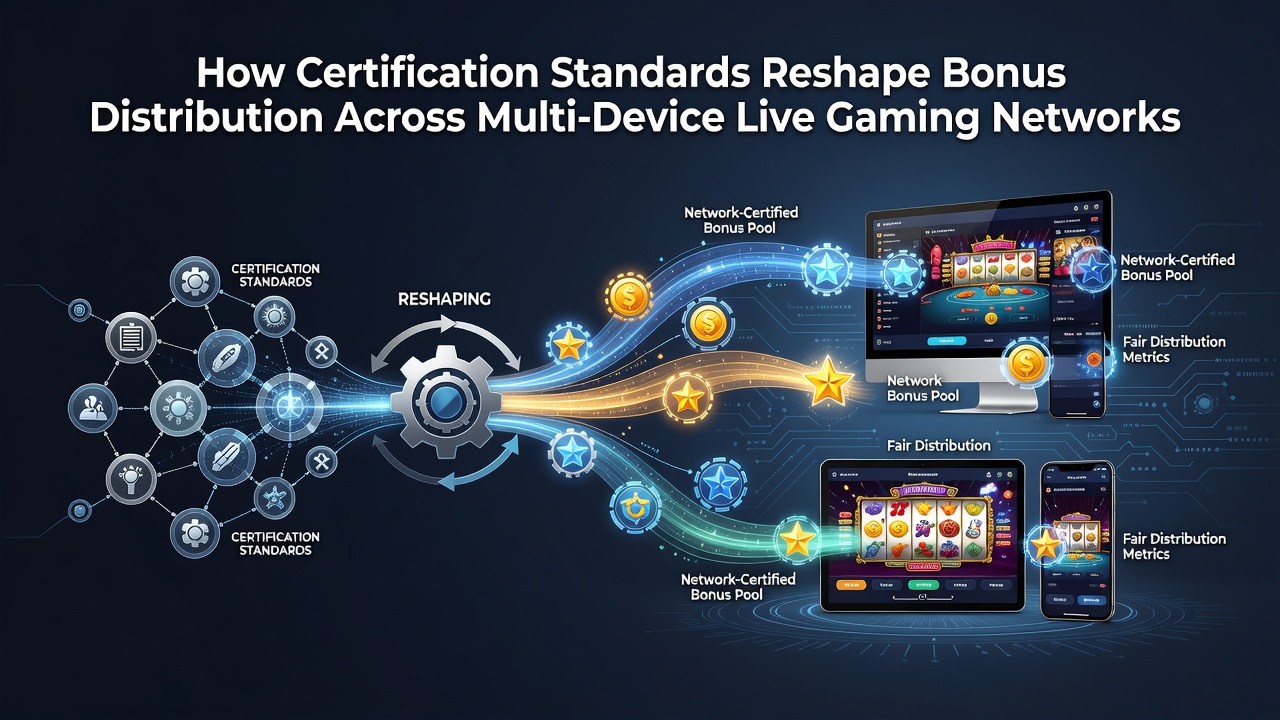
Certification standards from independent testing laboratories and regulatory bodies now dictate the precise mechanisms through which operators distribute bonuses in live gaming environments that operate across phones, tablets, and desktop systems simultaneously. These benchmarks require uniform verification of random number generators, payout ratios, and player eligibility criteria before any promotional credits reach user accounts, and the process creates synchronized reward flows that adjust automatically when players switch devices mid-session.
Core Mechanisms Behind Certification-Driven Distribution
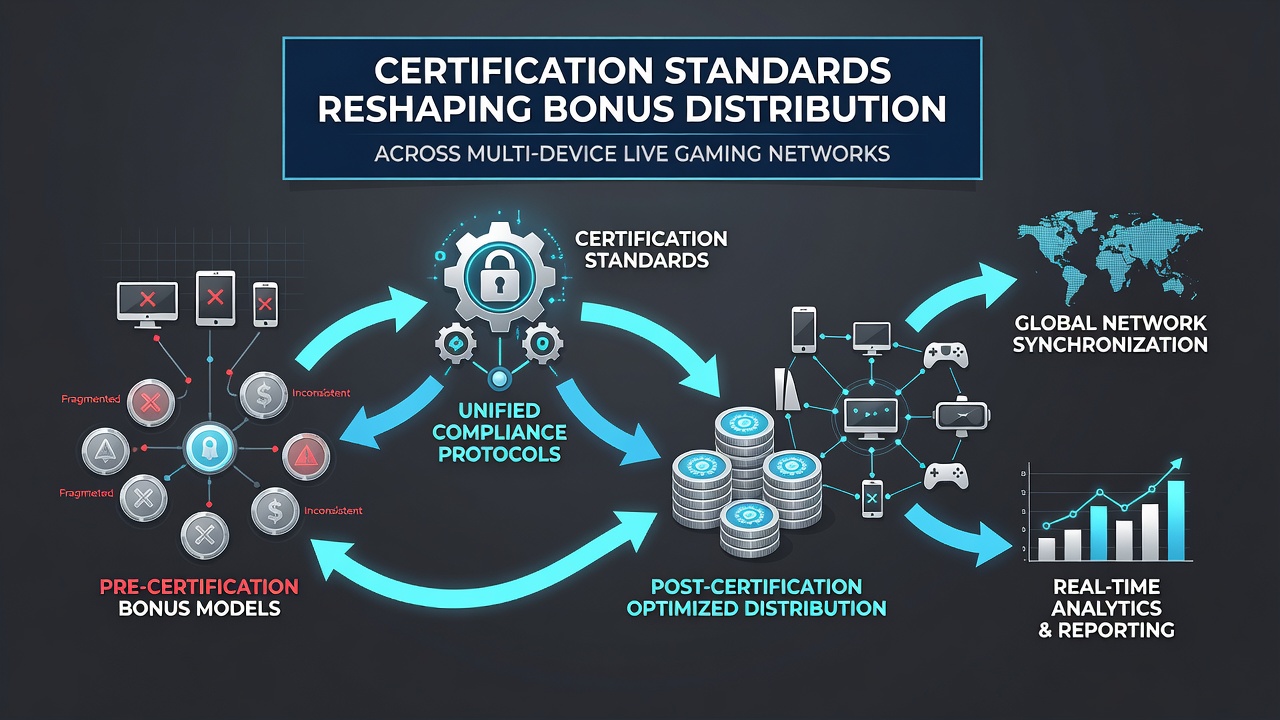
Testing agencies evaluate each network component against documented technical requirements that cover transaction logging, anti-money laundering checks, and cross-device session continuity. Once a platform receives approval, operators must route all bonus calculations through certified modules that enforce identical rules regardless of whether the connection originates from a mobile app or browser interface. Data from regulatory filings shows these modules recalculate eligibility thresholds in real time when network latency or device type changes, preventing duplicate or inflated awards that would violate the original certification terms.
Operators integrate these certified systems with existing loyalty engines so that achievement tiers update consistently across accounts. When a player completes a live dealer challenge on one device, the certified ledger records the event and applies the corresponding bonus tier on any other device used in the same account. This architecture reduces discrepancies that previously arose from fragmented tracking methods and aligns distribution schedules with audit trails required by oversight agencies.
Regional Regulatory Examples and 2026 Developments
Nevada Gaming Control Board documentation outlines how certified bonus engines must maintain identical payout percentages across approved channels, while the Australian Communications and Media Authority requires annual re-certification that includes stress tests for multi-device traffic spikes. These requirements converge in networks serving international players, forcing operators to maintain parallel compliance records that reference both jurisdictions. In June 2026, several major platforms plan hardware transitions that coincide with updated certification cycles, requiring fresh validation of bonus allocation scripts before new desktop terminals come online alongside existing mobile infrastructure.
Industry reports from the European Gaming and Betting Association indicate that certified networks experience fewer compliance incidents related to bonus misuse because automated flags trigger whenever distribution patterns deviate from pre-approved models. Observers note that this predictability benefits players who move between devices frequently, since reward balances remain accessible and accurate without manual intervention.
Technical Integration and Player Journey Adjustments
Live gaming networks employ API gateways that sit between certified bonus engines and game servers, translating device-specific inputs into standardized data packets. When certification standards mandate a minimum return-to-player threshold for promotional funds, the gateway applies that threshold uniformly before the bonus activates on any terminal. Players who begin a session on mobile and continue on desktop encounter no interruption in their current bonus status because the certified ledger synchronizes state across active connections within milliseconds.
One documented case involved a European operator that restructured its reward tiers after receiving updated certification for a new mobile integration layer. The revised system automatically prorated bonus contributions based on time spent at live tables rather than total wagers alone, satisfying both mobile and desktop audit requirements. Figures from the operator's post-implementation review showed that bonus redemption rates stabilized across device types once the certified logic replaced earlier manual reconciliation processes.
Future Trajectory and Compliance Overhead
Certification bodies continue to expand test suites to cover emerging technologies such as cloud-based live dealer streams and cross-border account portability. Each expansion adds new validation steps that operators must complete before releasing updated bonus campaigns. Research from academic centers studying digital gaming infrastructure highlights how these layered requirements extend development timelines yet produce distribution frameworks that remain stable when scaled to millions of concurrent sessions.
Those who manage multi-device networks report that maintaining certification status requires dedicated compliance teams that monitor rule changes across jurisdictions. The resulting systems deliver consistent bonus experiences that align with documented standards, reducing variance that once appeared when players switched devices or crossed regional boundaries.
Conclusion
Certification standards establish the operational rules that govern bonus distribution across live gaming networks serving multiple device types. By enforcing uniform verification, synchronized ledgers, and real-time eligibility checks, these benchmarks create distribution pathways that remain consistent whether players connect through mobile applications or desktop interfaces. As platforms prepare for scheduled updates in June 2026 and beyond, the role of certification continues to expand in shaping how rewards reach participants in synchronized, auditable formats.