Inside Player Data Streams: How Engagement Metrics Reshape Bonus Structures Across Mobile Slot Networks

Player data streams in mobile slot networks consist of continuous logs that track session duration, wager frequency, bet sizing patterns, and feature activation rates across thousands of devices at once, and these streams feed directly into algorithms that adjust bonus structures in real time. Operators collect timestamped entries for each spin along with metadata on device type and connection stability, then process the aggregated figures to determine when and how often to trigger deposit matches or free spin packages.
Data Collection Mechanisms in Mobile Slot Platforms
Telemetry systems embedded in slot applications record every interaction from the moment a user opens the game until the session ends, and this granular capture allows networks to segment players into cohorts based on average spins per minute or the ratio of bonus rounds to base game plays. Software development kits from major providers integrate with backend servers to transmit these metrics every few seconds, creating datasets that reveal correlations between prolonged low-stake sessions and subsequent bonus eligibility thresholds. Observers note that networks often weight recent activity more heavily than historical totals, so a sudden increase in daily logins can shift a player into a higher reward bracket within twenty-four hours.
Engagement Metrics Driving Bonus Allocation
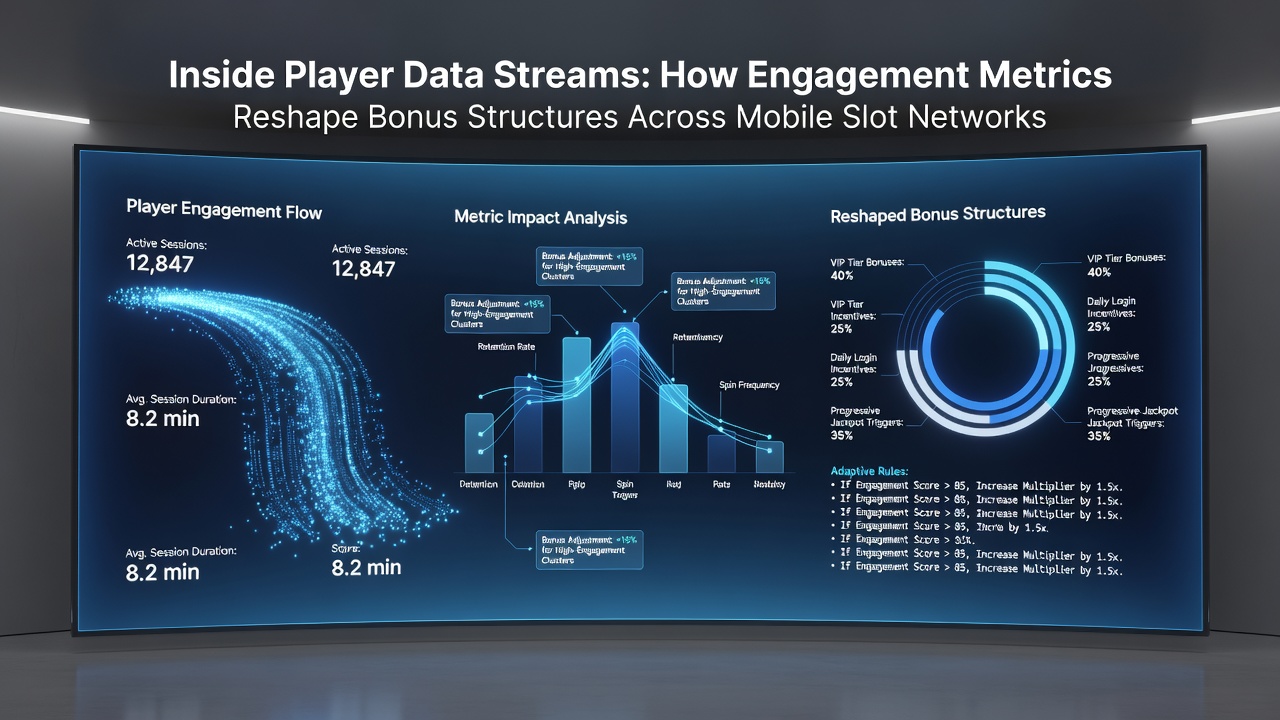
Key indicators include average session length measured in minutes, the percentage of spins placed at maximum bet levels, and the rate at which players trigger in-game features such as wild multipliers or scatter pays. When these values exceed predefined benchmarks, the system automatically expands the size of welcome packages or accelerates progression through loyalty ladders. Research from the American Gaming Association shows that mobile operators using engagement-weighted models report higher retention figures compared with static bonus schedules, because the rewards appear more responsive to individual behavior patterns. Networks also monitor idle time between spins, reducing bonus frequency for accounts that exhibit long pauses while increasing it for those maintaining steady interaction rates.
Algorithmic Adjustments Across Multi-Device Networks
Cross-platform synchronization ensures that data collected on a smartphone carries over to tablet sessions without resetting engagement scores, and this continuity allows bonus structures to remain consistent even when users switch devices mid-campaign. Algorithms recalculate eligibility every hour using rolling windows of the past seven days, which means a player who completes several long sessions early in the week may unlock elevated free spin quantities by Friday. Figures from industry reports indicate that such dynamic scaling reduces bonus expenditure waste because rewards concentrate on accounts demonstrating sustained activity rather than one-time spikes.
Regional Regulatory Influences on Metric Usage
Authorities in different jurisdictions impose varying transparency requirements on how operators apply engagement data to bonuses, and these rules shape the granularity of adjustments permitted within each market. In Australia, state-level guidelines require clear disclosure when play patterns influence reward tiers, prompting networks to publish simplified explanations alongside the actual bonus calculations. Canadian provincial regulators have examined similar practices through public consultations, resulting in standards that limit the speed of algorithmic changes to prevent abrupt shifts in player expectations. Networks operating across borders therefore maintain separate rule sets for each region while sharing the underlying data infrastructure.
Case Examples of Metric-Driven Bonus Shifts
One network operating across multiple European markets adjusted its daily free spin allocations after internal analysis revealed that players logging between forty-five and sixty minutes per day converted at higher rates when offered smaller but more frequent rewards instead of larger weekly bundles. Another provider serving North American users introduced tiered deposit bonuses scaled by the number of consecutive active days, and subsequent data showed measurable increases in average revenue per user within those cohorts. These modifications occurred without altering the core game mathematics, relying instead on the timing and magnitude of promotional overlays.
Future Developments in Data Integration
By June 2026 several major platforms plan to incorporate additional sensor inputs from mobile devices, including battery level and screen orientation patterns, to refine engagement scoring further. Such expansions will allow bonus engines to differentiate between casual background play and focused sessions with greater precision. Industry groups continue to develop standardized reporting formats that let operators compare engagement outcomes across networks while maintaining compliance with local data protection statutes.
Conclusion
Engagement metrics now serve as the primary input for determining bonus frequency, size, and delivery timing across mobile slot networks, and the resulting structures adapt continuously to observed player behavior. Data streams supply the raw material for these calculations, while regional regulations define the boundaries within which adjustments occur. Networks that synchronize metrics across devices maintain consistent reward pathways, and ongoing technological refinements promise even tighter alignment between activity patterns and promotional outcomes in the years ahead.